
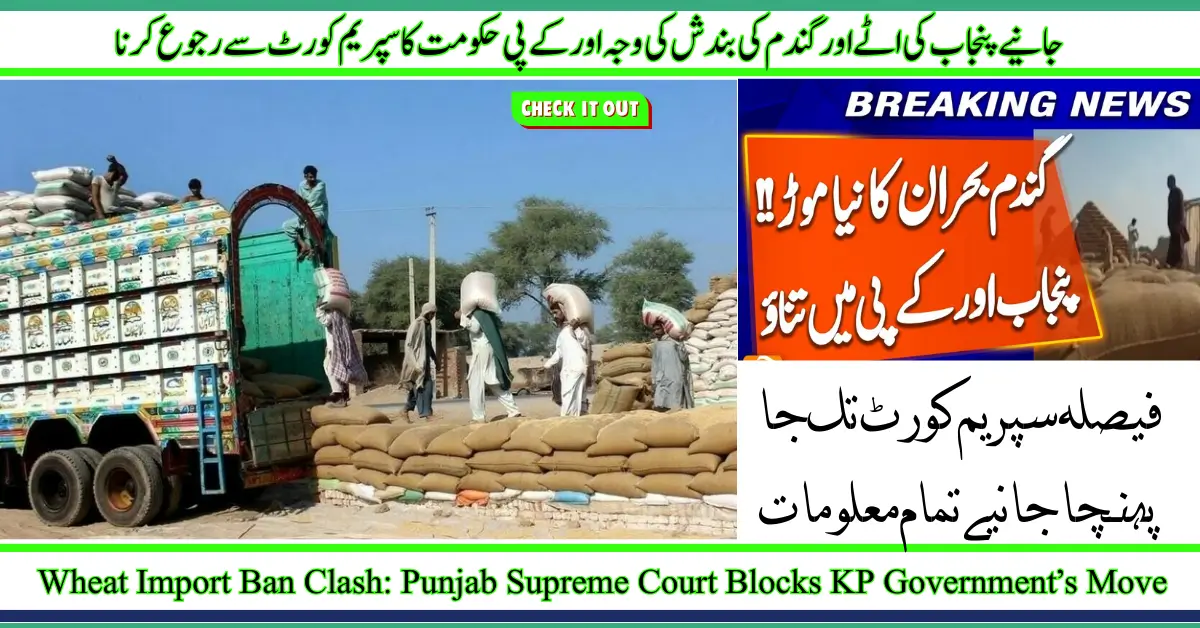
Wheat Import Ban Clash
Pakistan is currently facing a major interprovincial dispute that has stirred up political tension, disrupted trade, and triggered food inflation. The core issue? Wheat. Punjab, the country’s largest wheat-producing province, has imposed a ban on supplying wheat and flour to other provinces, a move that has sparked outrage in Khyber Pakhtunkhwa (KP). The KP government, facing severe flour shortages and skyrocketing prices, has taken the matter to the Supreme Court, accusing Punjab of violating the Constitution.
Let’s dive into the background, legal implications, economic impact, and possible outcomes of this critical food supply dispute.
CM Punjab Green Credit Program: Milestones, Impact and Future Goals
Background: KP’s Dependence on Punjab’s Wheat
Khyber Pakhtunkhwa is not self-sufficient in wheat production. The province relies on Punjab for nearly 83% of its wheat supply. When Punjab imposed a ban on wheat and flour movement, KP was immediately hit hard. Prices of flour spiked — reaching up to Rs. 2,800 for a 20-kg bag, creating panic in the local markets and among low-income households.
KP lawmakers argue that the ban violates Article 151 of the Constitution, which ensures free trade and movement of goods between provinces. The KP government has now approached the Supreme Court, demanding the removal of restrictions and restoration of wheat supply.
The Punjab Supreme Court has blocked the Khyber Pakhtunkhwa government’s attempt to impose a wheat import ban. The decision aims to maintain market stability and prevent disruptions in the province’s wheat supply.
Punjab’s Justification for the Ban
Punjab has defended its decision, citing concerns over local food security. Officials claim that the wheat supply chain was being exploited by hoarders and smugglers. To prevent a potential crisis within Punjab, the government set up checkpoints and banned the outward movement of wheat and flour.
Punjab argues that:
- The ban is a temporary administrative measure.
- It aims to prevent hoarding and ensure availability for local consumers.
- Without control, private players may manipulate prices and create artificial shortages.
However, critics say that this move is counterproductive, and that it disrupts national trade, damages market confidence, and fuels political rivalry.
Punjab Crop Insurance Scheme 2025: No Cost, Full Coverage
Supreme Court Steps In
The Supreme Court of Pakistan has taken notice of the growing tensions and has begun reviewing the case. KP’s petition, based on Article 151, claims Punjab’s ban is unconstitutional and is harming millions of citizens.
Punjab, in turn, argues that:
- The restrictions are within provincial rights to safeguard food supplies.
- The ban is not permanent and aims to curb illegal trade practices.
The court is now in the process of determining:
- Whether provincial bans on essential commodities are legal.
- How to balance provincial autonomy with the federal principle of free trade.
- The economic consequences of such restrictions.
A verdict from the court will have nationwide implications, not just for wheat, but for all essential commodities in interprovincial trade.
Impact on Traders, Farmers, and Consumers
This wheat ban has created a ripple effect across the economy:
- Traders are stuck with delayed shipments, rising transportation costs, and uncertain regulations.
- Farmers are facing declining wheat prices in Punjab and fear they may not be able to sell their crops next season.
- Consumers, especially in KP and Sindh, are bearing the worst — with flour prices rising by more than 60%, affecting the poorest the most.
Industry analysts warn that such restrictions discourage private sector investment in wheat storage and distribution, making the market more fragile in the long term.
BISP 8171 Payment 2025: How to Check Your New Installment Online Easily
Political Tensions Escalate
The dispute has taken a political turn. KP lawmakers have threatened to cut energy supplies including gas and electricity to Punjab if the ban is not lifted. This tit-for-tat stance has raised concerns over the unity and coordination between provinces.
Meanwhile:
- Flour mill associations have condemned the ban, saying it disrupts business and food supply chains.
- Economists argue that government intervention should be limited to regulation, not restriction.
- The public, especially in affected areas, is voicing frustration over rising costs of basic necessities.
Legal and Constitutional Implications
At the heart of the matter lies Article 151 of the Constitution, which guarantees freedom of trade, commerce, and movement between provinces. If the Supreme Court rules in favor of KP, it may:
- Set a legal precedent against future commodity bans.
- Reinforce the constitutional right of unrestricted trade across Pakistan.
- Encourage market liberalization and private investment.
On the other hand, if the court supports Punjab’s stance:
- It may give provinces greater control over local resources during times of scarcity.
- But it could also open the door for further trade restrictions in future crises.
Possible Outcomes and Future Outlook
Depending on how the court rules, several outcomes are possible:
- Ban is lifted: Wheat movement resumes, prices in KP stabilize, and provinces agree on mutual supply frameworks.
- Partial regulation allowed: Punjab may impose conditions but not a complete ban.
- Stronger legal framework introduced: Federal and provincial governments may establish clear rules on interprovincial trade of essential goods.
- Increased investment in wheat production in provinces like KP to reduce dependency.
In the long term, consistent national food policy, investment in agriculture, and stronger market regulation are key to avoiding such disputes in the future.
Update Your NADRA ID Card Picture Easily: Online Method Explained
Conclusion
The wheat supply dispute between Punjab and KP is more than just a trade conflict; it reflects the challenges of governance, resource management, and constitutional balance in Pakistan. While Punjab’s concerns about food security are valid, blanket bans on interprovincial trade violate the spirit of national unity and hurt the very people the policies aim to protect.
The Supreme Court’s intervention is a vital step toward restoring fairness and legal clarity. But lasting stability will only come with collaboration, transparency, and policy consistency ensuring that every citizen, regardless of province, has access to affordable food and essential goods.
FAQs
Why did KP challenge Punjab’s wheat ban?
KP depends on Punjab for 83% of its wheat supply. The ban led to shortages and a sharp rise in flour prices, prompting KP to challenge the decision in the Supreme Court under Article 151 of the Constitution.
What is Article 151 of the Constitution?
Article 151 guarantees free trade and movement of goods between provinces, prohibiting barriers that obstruct interprovincial commerce.
How did the ban affect consumers?
Flour prices surged in KP and other provinces. A 20-kg bag reached up to Rs. 2,800, severely affecting lower-income households.
What is the Supreme Court’s role in this dispute?
The Court is reviewing the legality of Punjab’s ban and whether it violates the Constitution. Its decision will set an important legal precedent.
What are the possible solutions?
Solutions include lifting the ban, introducing regulated trade frameworks, increasing investment in agriculture, and ensuring federal oversight of essential commodity trade.
Sahiwal Electric Bus Routes: Full List of Stops, Timings, and Fares